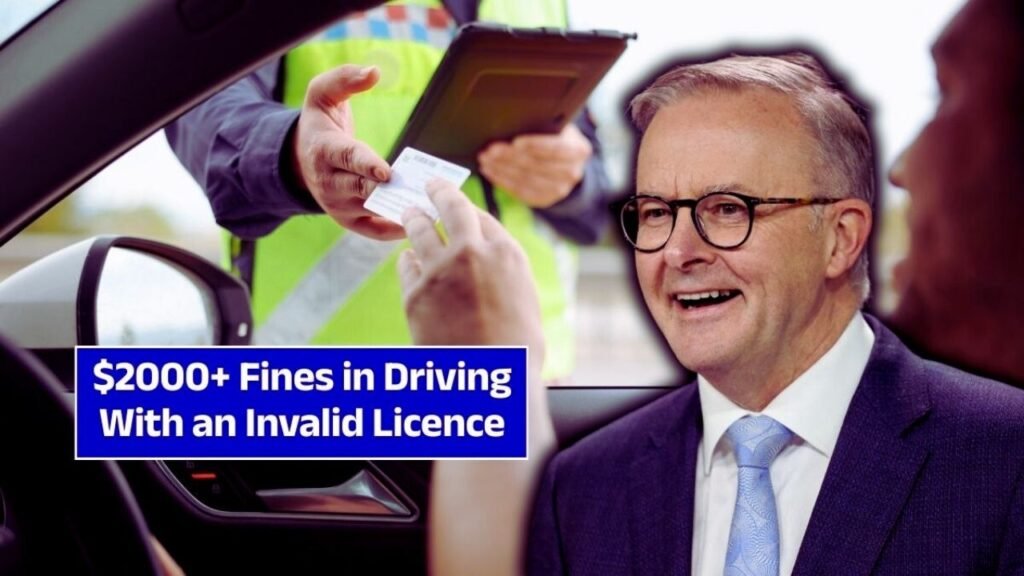
If you’ve got an expired, suspended, disqualified, or otherwise invalid driver’s licence in Australia, driving with it in 2026 can hit your wallet hard—often well over $2000 when you factor in fines, court costs, and extras like vehicle impoundment. While penalties for driving unlicensed or while disqualified have always been serious, recent state-level crackdowns and enforcement pushes in early 2026 have ramped up the consequences in many areas. Headlines warn of fines exceeding $2000, instant suspensions, and tougher handling for repeat or high-risk cases. These aren’t a single nationwide change but a mix of ongoing stricter enforcement, higher maximum penalties in some states, and zero-tolerance approaches to road safety after tough years on the roads. Here’s what the rules mean now and why you need to double-check your status today.
What Counts as an “Invalid” Licence?
An invalid licence includes:
- Expired (past renewal date—no grace period in most states for driving).
- Suspended (by police, court, demerit points, unpaid fines, etc.).
- Disqualified/cancelled (court-ordered ban after serious offences like drink-driving).
- Never held one (completely unlicensed).
Driving in any of these situations is a criminal offence in every state and territory—not just a minor slip.
- Penalties vary by state, whether it’s a first offence or repeat, and if aggravating factors (like speeding while disqualified) apply.
- Courts often handle disqualified/suspended cases, leading to higher costs than simple infringement notices.
How Much Can It Cost in 2026?
Fines have edged up or enforcement has toughened in several places, pushing totals over $2000 easily:
- On-the-spot fines for expired/unlicensed can start at $500–$1500, but court penalties for disqualified driving reach $2000+ in many states (e.g., up to $3000+ max in ACT/QLD for some cases).
- Court-imposed fines often exceed $2000 when disqualified driving is involved, plus extra costs like legal fees or victim levies.
- Vehicle impoundment adds towing/storage fees (hundreds to thousands).
- Extended disqualification periods follow, plus possible jail in extreme cases (up to 1–2 years max in some states).
- Repeat offenders or those driving while already suspended face the harshest hits—fines, longer bans, and impoundment common.
- Some states report fines “surpassing $2000” when court escalates from infringement notices.
These aren’t new 2026 inventions but reflect higher maximums, stricter policing, and no leniency for “I forgot” excuses.
State Variations and Key Changes
Rules are state-based—no uniform national fine—but 2026 enforcement feels tougher overall:
- NSW/VIC/QLD: Disqualified driving often court-mandated, with fines $2000–$4000+ possible, plus 2–5+ years extra disqualification.
- Other states: Similar patterns—expired might get $500–$1000 infringement, but suspended/disqualified jumps to court and higher penalties.
- Broader 2026 trends include faster fine escalation, more AI/camera enforcement, and focus on high-risk driving.
If caught, expect police to seize your licence/keys on the spot in many cases, plus immediate suspension.
What Drivers Must Do Now
Don’t risk it—check your licence status immediately:
- Log into your state transport portal (e.g., myServiceNSW, VicRoads, QLD Transport) or app to see expiry, demerits, or suspensions.
- Renew expired licences online or in person before driving—many allow early renewal.
- Pay any outstanding fines quickly to lift suspensions.
- If disqualified/suspended, wait out the period—no shortcuts.
- Carry proof of valid status if needed (digital licences accepted in most places).
Ignoring this can turn a simple drive into major legal and financial trouble.
Other Related Adjustments
Tied to broader 2026 road safety pushes: higher fines for mobile use, speeding, and distractions; more instant suspensions; and emphasis on compliance. No grace periods for expired licences in most states—drive invalid and you’re at risk.
Driving with an invalid licence in 2026 can easily cost Australians over $2000 through fines, court penalties, impound fees, and longer bans—especially if suspended or disqualified. States treat it as a serious safety issue with tougher enforcement and higher maximums than before. The message is clear: check your status, renew on time, resolve issues, and never drive if unsure. One mistake can lead to big consequences for your wallet, record, and freedom. Head to your state transport website (like transport.nsw.gov.au or vicroads.vic.gov.au) or call them today—better safe than sorry.