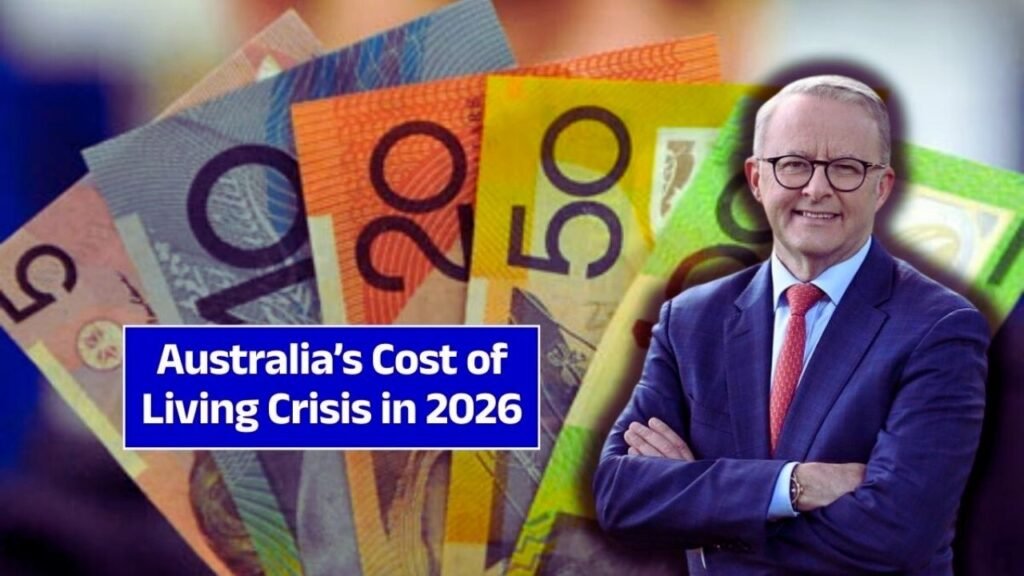
For millions of Australian households, 2026 has become the year the “squeeze” turned into a “crush.” Despite a series of government tax cuts and medicine subsidies, the combination of a global energy shock and a record-breaking rental crisis has pushed the average family budget to a breaking point. With weekly expenses rising by an estimated $175 compared to previous years, the common refrain in suburbs from Western Sydney to Brisbane is simple: there is quite literally nothing left to cut.
The “Triple Threat” of 2026
While inflation was once driven by post-pandemic supply chains, the 2026 crisis is being fueled by three specific, aggressive factors that have hit simultaneously.
1. The Energy Shock & Petrol Panic
In March 2026, a major geopolitical conflict in the Middle East led to the disruption of the Strait of Hormuz, a critical chokepoint for global oil.
- At the Pump: Average petrol prices have surged, leading to “panic buying” and urgent government calls for calm.
- In the Home: Electricity prices have jumped by 32.2% as state-level rebates expired and the cost of generation flowed through to retail bills. Experts warn this energy spike will trigger a “second wave” of inflation as businesses pass these costs onto consumers by late 2026.
2. The Rental Record Low
Rental affordability in Australia has hit its worst level since data collection began in 2008.
- The Gap: National median rents have surged to $650 per week—a 55% increase since 2020, while wages grew by only 25% in the same period.
- The “2% Reality”: For households earning under $75,000, only 2% of advertised rentals are now considered affordable. This has forced families into “emergency” living situations, such as moving back in with parents or downsizing to apartments where children are sleeping in living rooms.
3. The Mortgage Trap
With inflation remaining stubbornly outside the Reserve Bank’s 2–3% target (holding at 3.8% in early 2026), the RBA hiked the cash rate to 4.1% in March. Many economists now predict it could reach 4.6% by November. For the “average” mortgage holder, repayments now consume roughly 45% of pre-tax income.
Where the Money is Going: 2026 Weekly Increases
According to recent household expenditure reports, the average Australian family is paying significantly more across every essential category:
| Expense Category | Average Weekly Increase (AUD) | Primary Driver |
| Housing / Rent | $65 | 1% vacancy rates & high demand |
| Groceries | $40 | Fuel & fertilizer supply shocks |
| Energy Bills | $30 | Expiry of government subsidies |
| Transportation | $25 | Global oil volatility (Hormuz crisis) |
| Other Essentials | $15 | General services inflation |
The Human Cost: “Survival Mode”
The statistics hide a grimmer reality for families. In 2026, “budgeting” has evolved into “survivalism.”
- Medical Trade-offs: Despite a drop in the maximum PBS co-payment to $25.00 on January 1st, many families are still delaying dental and specialist appointments to keep the lights on.
- Food Insecurity: Food pantries are reporting an influx of “working poor”—dual-income families who can no longer afford the $40/week jump in grocery costs.
- Social Isolation: A growing number of Australians report they have stopped socializing entirely, as even a “cheap” coffee or a trip to the park (gas costs) has become a luxury they cannot justify.
“I sat at the table and cried. I’ve cut the streaming services, we don’t eat out, and the heater stays off. There’s just nowhere left to go.” — Tanya, single mother in Melbourne.
Is There Any Relief?
The government has introduced a “Stage 4” style tax cut plan. From July 1, 2026, the 16% tax rate will drop to 15%, saving the average worker about $268 this year. While helpful, many financial analysts argue this “top-up” is being immediately swallowed by the $2,000+ annual increase in basic utility and rent costs.